KuCoin’s new perp rule can turn one funding-rate extreme into 36 hours of hourly settlements
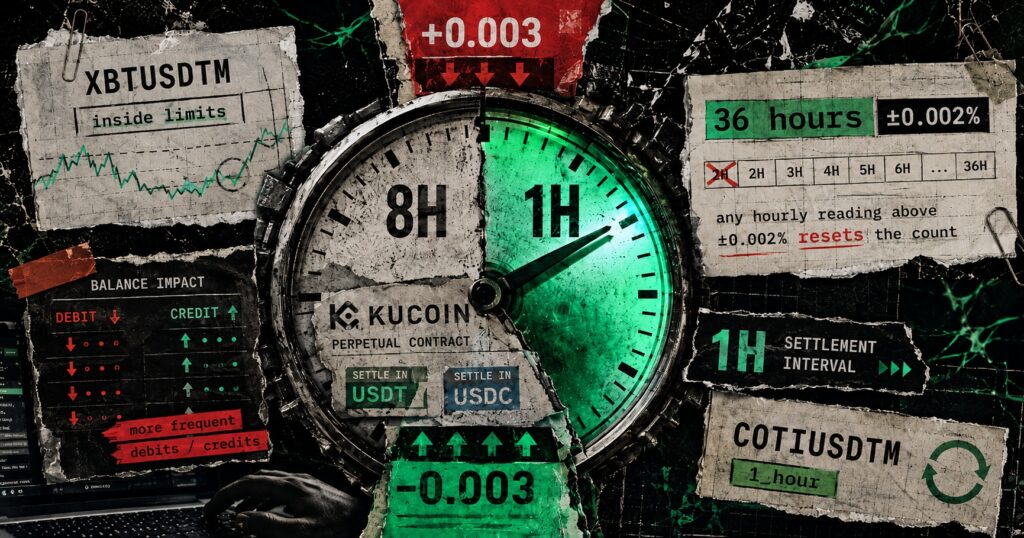
KuCoin activated a rule after 08:00 UTC on Aug. 17 that moves USDT- and USDC-margined perpetual contracts to hourly funding settlement once their contract-specific funding cap or floor is reached.
The change applies starting with the next funding period and will happen without a separate announcement, shortening the time between potential funding debits and credits for traders who keep positions open.
Under the mechanism, the trigger is the funding rate at a scheduled settlement. If that rate is at or above the contract’s upper limit, or at or below its lower limit, KuCoin switches the contract to a one-hour interval unless it is already settling hourly.
Trigger conditionWhat KuCoin changesWhat does not changeTrader impactFunding rate hits or exceeds contract capContract moves to hourly settlement next periodFunding formula, cap, floor, and positions stay unchangedFunding debits/credits can occur more oftenFunding rate hits or falls below contract floorContract moves to hourly settlement next periodDirection and size of position still determine paymentShorter interval between balance impacts36 consecutive hourly periods stay within ±0.002%Contract returns to four-hour settlement from 37th periodNo separate notice requiredTraders must track the reset condition themselvesAny hourly reading exceeds ±0.002% during cooldown36-hour count resetsContract remains in hourly modeHourly exposure can persist longer than expected

KuCoin said the interval adjustment changes settlement frequency but leaves its funding calculations, funding limits, and users’ positions unchanged. Funding may be debited or credited more often, but cumulative cost still depends on the realized rates, the side and size of the position, and how long it remains open.

KuCoin perp change explained
The exchange requires 36 consecutive one-hour settlements with an absolute funding rate no greater than 0.002%, and a reading above that threshold resets the count. Once all 36 periods qualify, the post-trigger schedule moves from hourly to four-hour settlement starting with the 37th period, again without separate notice.

KuCoin does not apply a universal cap or starting interval, and its announcement uses a Bitcoin perpetual with upper and lower limits of plus and minus 0.3% as an example.
At 20:15 UTC on Aug. 17, KuCoin’s live XBTUSDTM contract data showed a 0.003 cap, a minus 0.003 floor and an eight-hour interval. Its current funding rate fell within those limits, so the contract had not entered the mechanism’s hourly phase.
Contract / datasetFunding capFunding floorSettlement intervalWhat it showedXBTUSDTM at 20:15 UTC+0.003-0.0038 hoursFunding rate was inside limits, so hourly trigger was not activeCOTIUSDTMContract-specificContract-specific1 hourOnly active contract observed on hourly settlementBroader active-contract listVaries by contractVaries by contractMostly non-hourlyNo clear first-day automatic activation identifiedAutomatic ruleVaries by contractVaries by contractTriggered contracts move hourlyApplies without separate announcement after cap/floor breach
KuCoin’s broader active-contract data at the same time showed only COTIUSDTM on an hourly interval. That cycle began July 28 under a separate KuCoin notice, before the automatic rule took effect, so the first-day reading did not identify a contract newly in an automatic hourly state, although it cannot rule out a brief activation earlier in the day.

For traders, the change is timing. Reaching a contract’s limit can turn the next funding period into an hourly balance sheet event, while returning to a slower schedule requires at least 36 consecutive qualifying hours. The realized rate still determines each transfer.